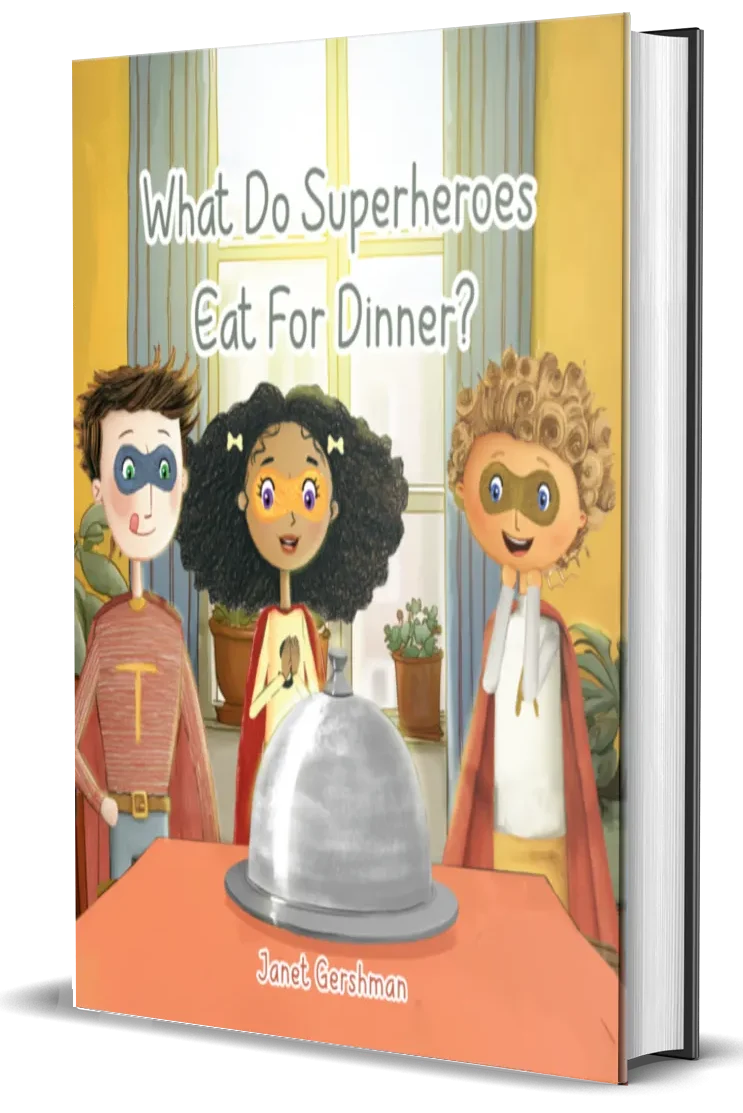
Food is one of the most natural ways for children to learn about the world. It is colourful, familiar, and tied to daily life, yet it also opens doors to new cultures, traditions, and experiences. In What Do Superheroes Eat for Dinner? by Janet Gershman, food becomes more than something to eat. It becomes a pathway for discovery, curiosity, and meaningful learning.
Children often learn best when they can connect new ideas to something they already understand. Food provides that connection. A child may already recognise pasta or tacos, but when those foods are placed within different cultural settings, they begin to understand that meals tell stories about where people live and how they live. This makes learning feel natural rather than forced.
In the book, superheroes travel across the world, helping others and enjoying meals along the way. This structure introduces children to different countries without overwhelming them. Instead of presenting facts, the story invites children to experience each place through its food.
This approach increases curiosity. When children see familiar characters trying new foods, they become more open to doing the same. A child who might resist trying something new may feel more confident after seeing a superhero enjoy it. This influence can have a lasting impact on their willingness to explore different tastes and cuisines.
Food also helps build cultural awareness at an early age. Through simple storytelling, children begin to understand that people around the world eat different things and that these differences are something to appreciate. This early exposure fosters respect and openness—qualities that are important as children grow and interact with others.
Another strength of using food as a learning tool is its ability to engage multiple senses. Even while reading, children imagine the colours, textures, and flavours of each dish. This sensory engagement makes the experience more vivid and memorable. It transforms reading from a passive activity into something immersive and engaging.
The story also highlights the connection between effort and reward. The superheroes help others first, then enjoy a meal. This pattern reinforces positive values such as kindness, responsibility, and appreciation. Children see that good actions are followed by moments of joy, creating a meaningful connection between behaviour and outcome.
Parents and educators can build on this foundation. After reading, children can be encouraged to try foods from different cultures, talk about where they come from, or even help prepare simple dishes at home. This extends the learning beyond the page and turns it into a shared experience.
The simplicity of the storytelling is another important factor. The book does not rely on complex explanations. Instead, it presents ideas in a way that is easy to understand and enjoyable to follow. This makes it accessible to young readers while still offering depth through its themes.
What Do Superheroes Eat for Dinner? by Janet Gershman demonstrates how powerful simple ideas can be. By combining adventure with food, it creates a learning experience that feels effortless. Children are not just reading about meals; they are exploring the world, building connections, and developing a sense of curiosity that extends far beyond the story.
Food, in this context, becomes more than nourishment. It becomes a bridge between cultures, a tool for learning, and a source of excitement. For children, that makes all the difference.
Don’t Miss Out – Available on Amazon:
https://www.amazon.com/dp/1972134108/